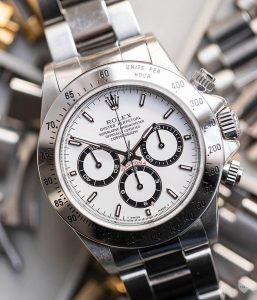
Rolex 5513 “Meters First”

In the world of vintage Rolex, the 5513 is quite an essential piece for any collector. Given its timeless design and different variants, the 5513 is one of the most favored reference for collectors worldwide.
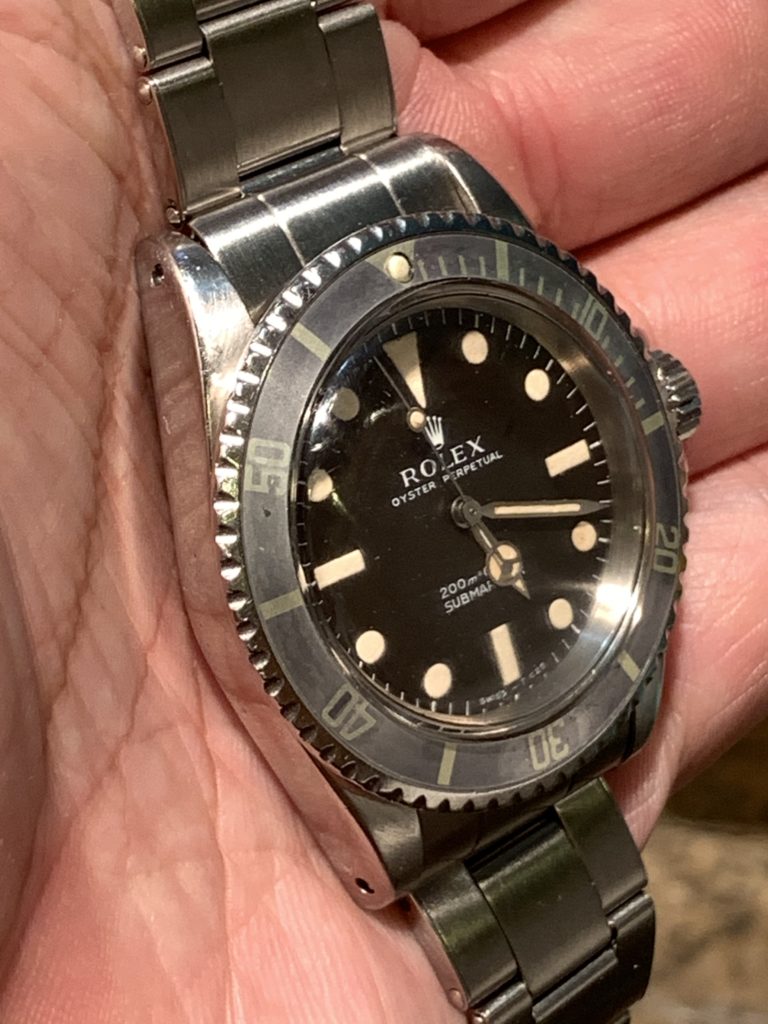
The 5513 is different from the 1680 as the latter has a date window at 3 o’ clock. Without the date function, the 5513 features a clean dial that is one of the most classic in the world of dive watches. The 5513 was produced from around 1962-1989 and it had a very long production run. Throughout those years, the 5513 had different dial variants.
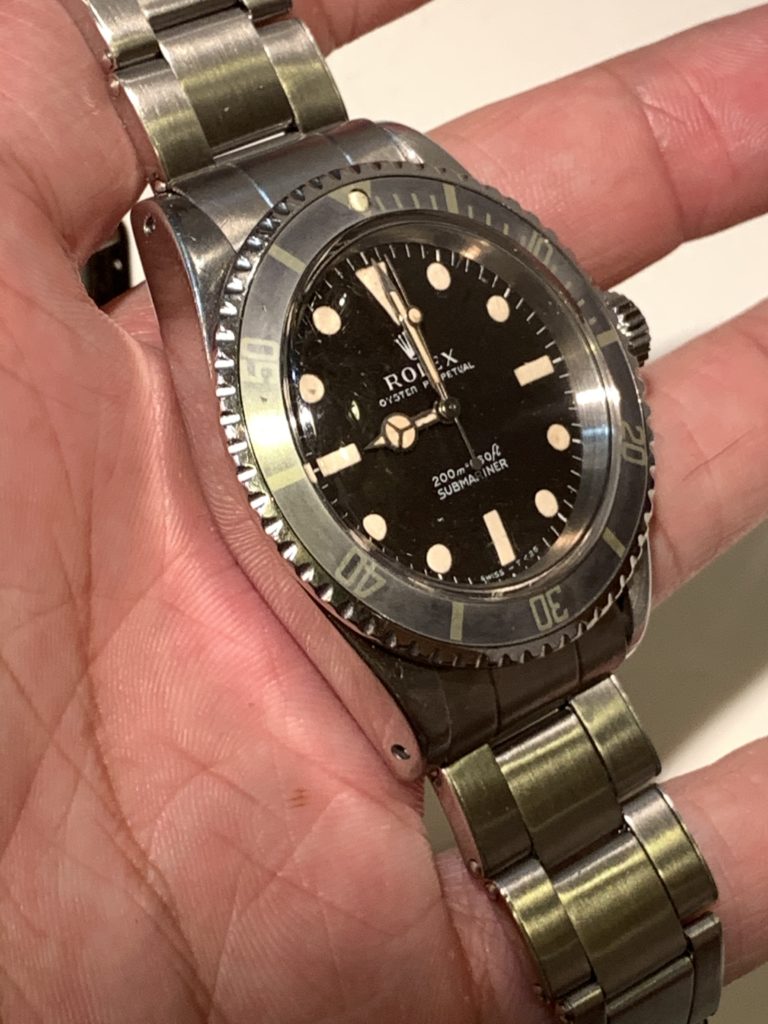
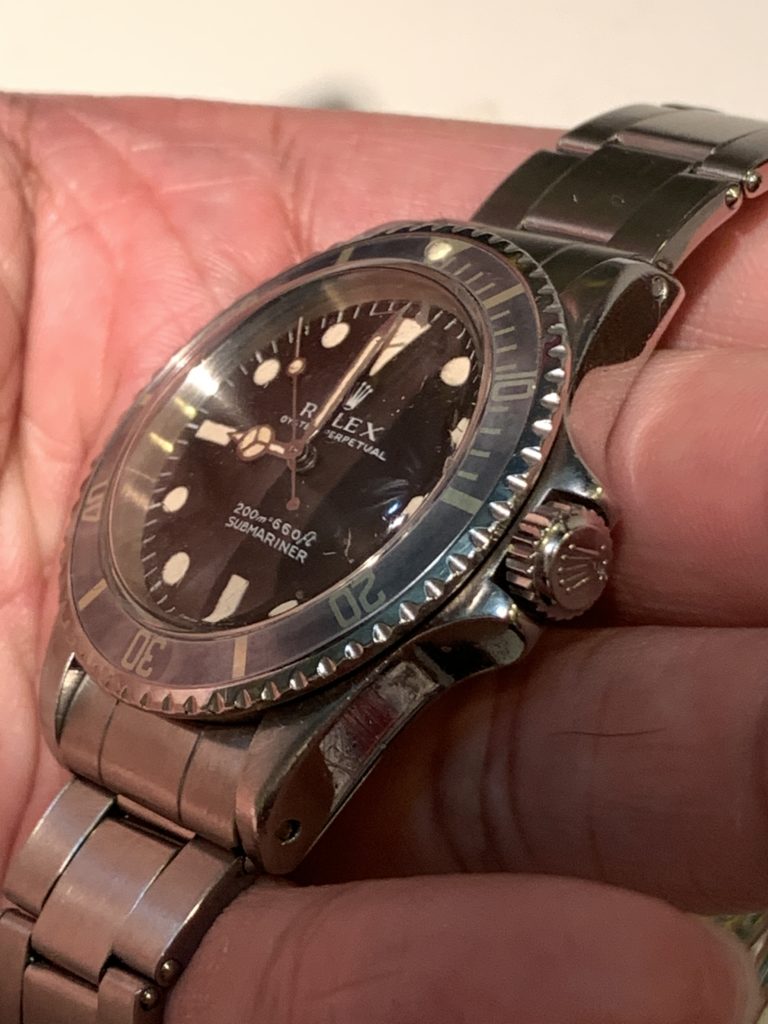
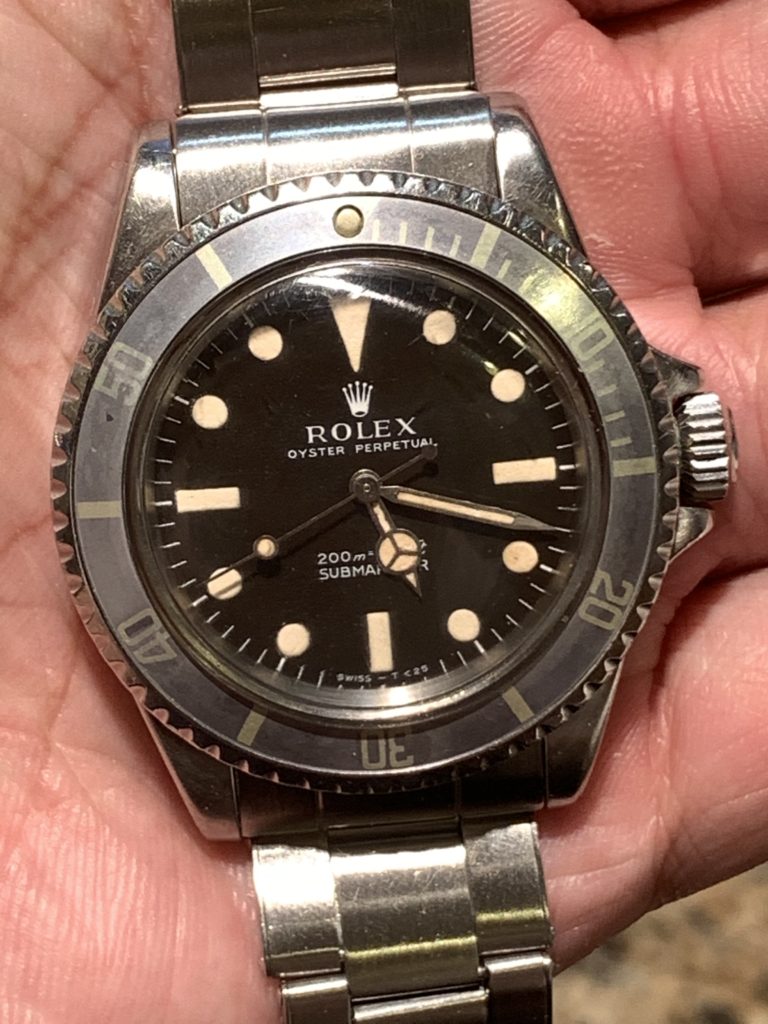
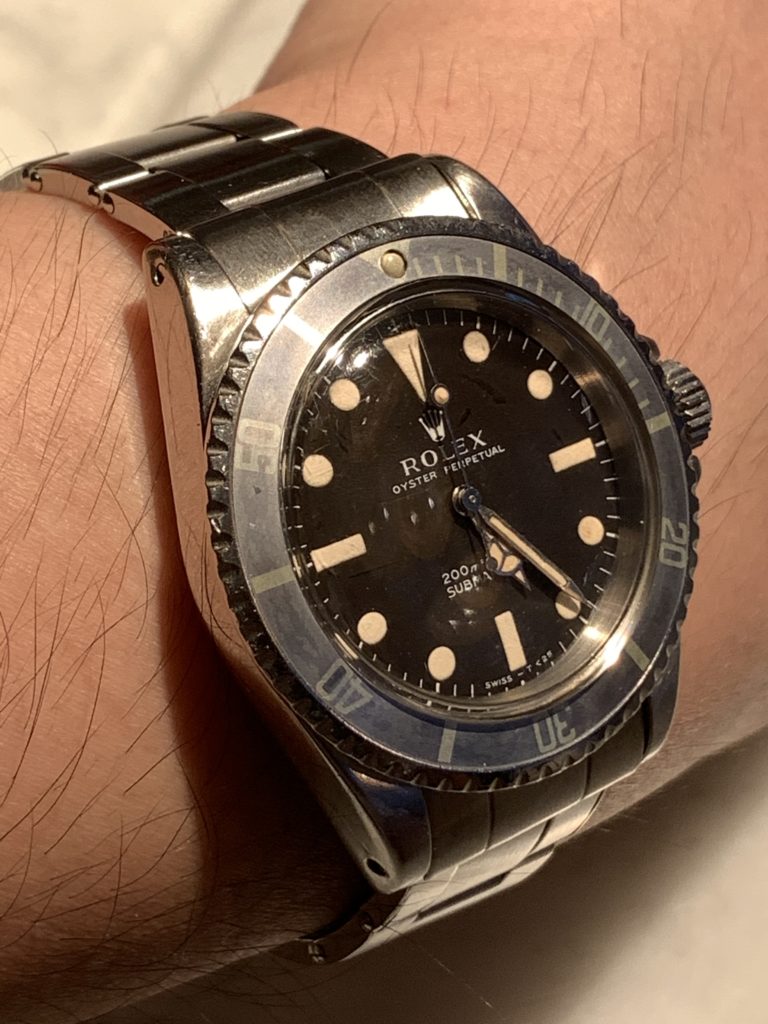
The matte dial 5513s were produced from around 1966, when the glossy gilt era ended, to 1984, when the lacquered glossy dial with white gold surroundings came. The Meters First dials were produced from s/n 1.6 in 1966 to around s/n 2.2 in 1970. The main feature is that the depth rating on the dial writes “200m=660ft” instead of “660ft=200m” in later variants. Other features include :

  • starting from the top of the dial, the “L” in “ROLEX” should have very little if any serif on top and should be centered under the coronet.
  • the “6’s” in the depth rating are semi-open
  • the “SWISS – T < 25” marking at the bottom of the dial is across a total of five minute hash marks at the bottom of the dial. (info from www.5513mattedial.com)
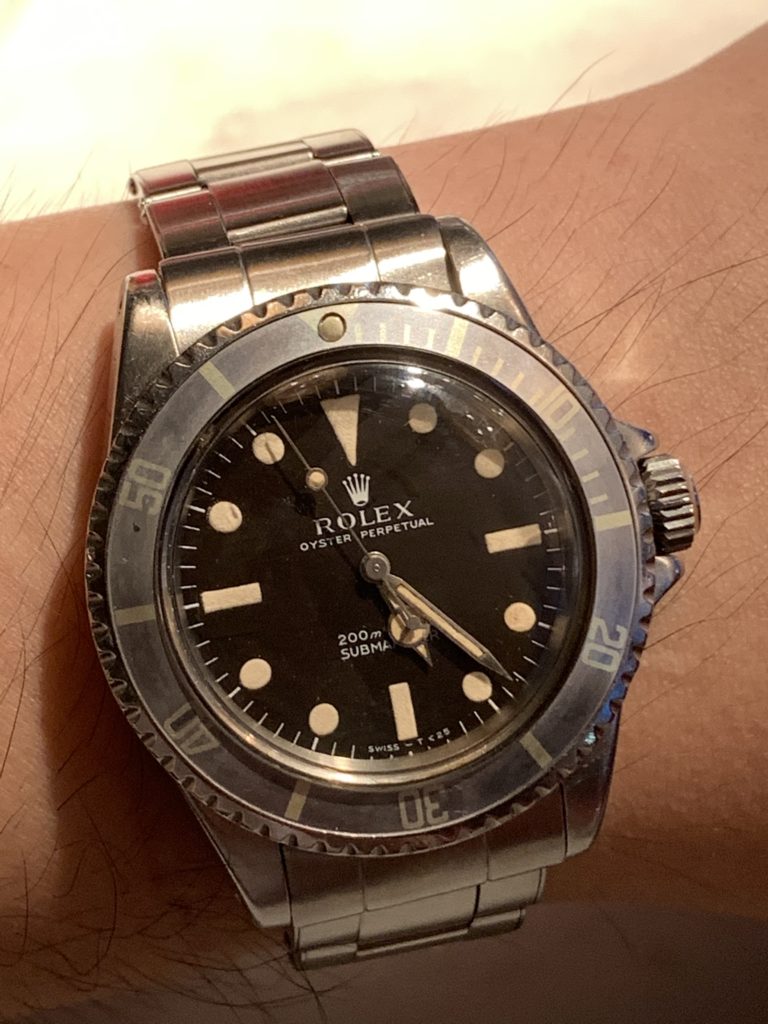
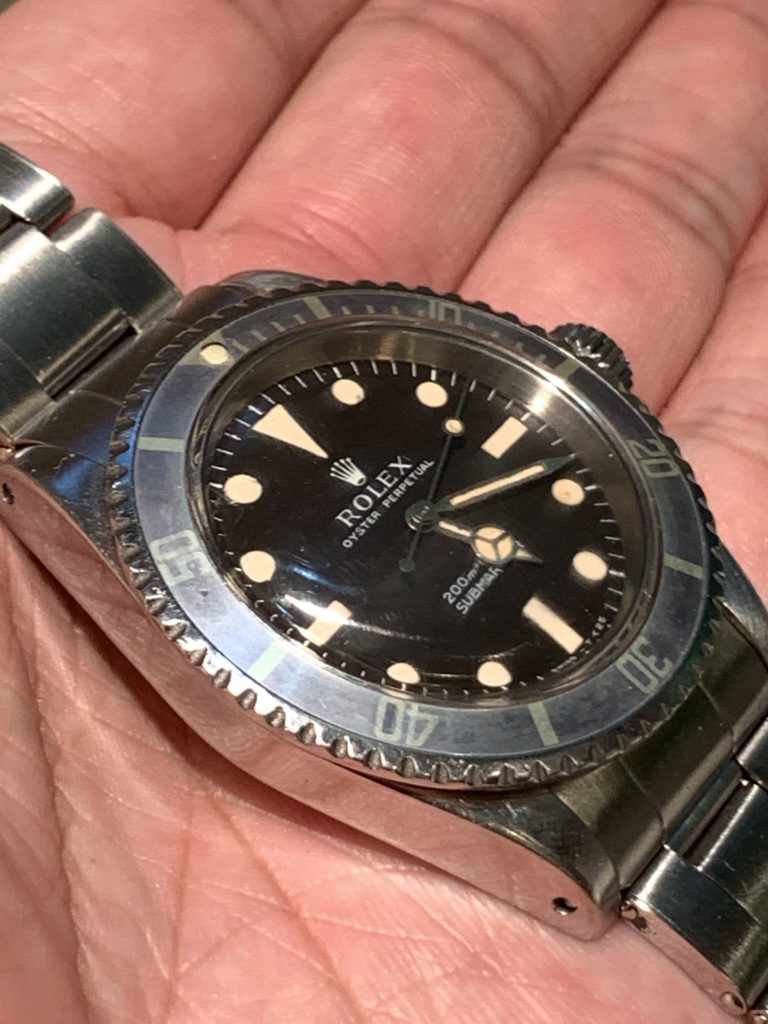
A 5513 Meters First is collectible because it was produced only from around 1966 to 1970. It is relatively rare and the distinct “meters first” feature was not to be seen in any later dial variants. A nice 5513 Meters First should have a clean dial without any broken minute markers or dirty lume. Also, the case should be fat and not overpolished, retaining as much the original shape as it can. It is best to be paired with a Swiss 7206 rivet bracelet which is relatively rare nowadays. The insert has to be a fat font MK3 insert instead of later thin font insert.
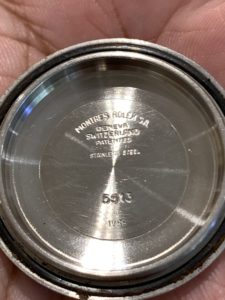
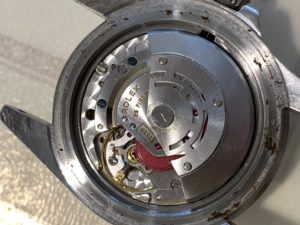
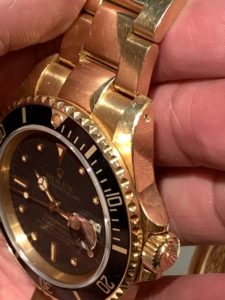
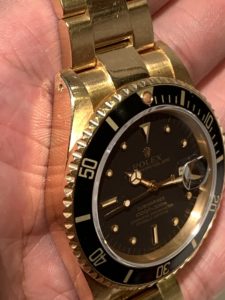
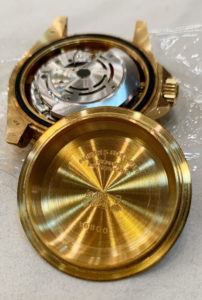
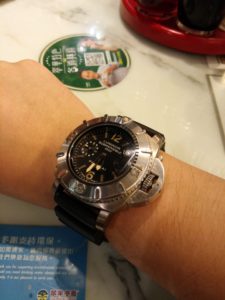
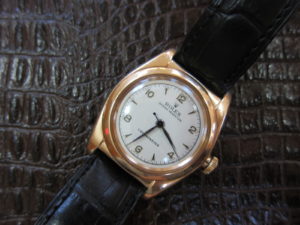
In the photos here is my 5513 Meters First 2.0mil s/n on a 7206 rivet bracelet from the same year the watch was manufactured. It features a mesmerizing ghost insert and it comes with an extra slightly faded MK3 fat font insert. The case is super fat and the dial is clean.
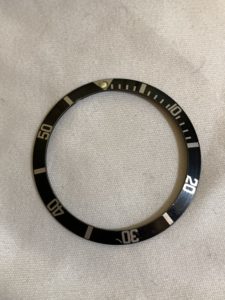
A 7206 rivet bracelet can cost up to 20k hkd while a MK3 insert can cost around 15-18k hkd. An average 5513 Meters First’s market price is around 135,000hkd while those in better condition or on rivet bracelets is around 150,000-160,000 hkd.
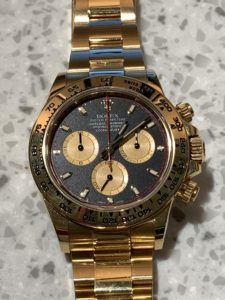
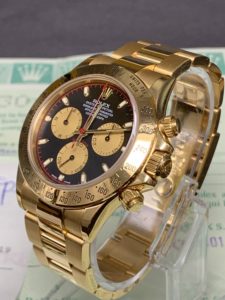
Rolex 116528 vs 116508 Paul Newman dial

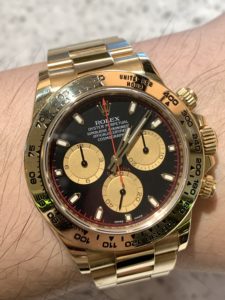
The Rolex Daytona has long been the brand’s hit item. For the 18k gold version, the “Paul Newman” dial, a black dial with champagne gold sub dials, is the most popular version. The newest 116508 with PN dial has some slightly different details that are not easy to spot.

First of all, the dial of the 116508 is around 1mm larger than that on the 116528. Secondly, the bezel slope is slightly steeper so that the bezel appears to be less think than the 116528. Also, the numbers on the sub dials are thinner than those on the 116528. While the movement remains the same, the new standard of accuracy is not +2/-2 per day. The central chronograph hand is orange red which is lighter than the sharp red on the 116508. Last but not least, the most obvious difference is the change of the markers on the bezel. The bezel now has thicker markers on the tachymeter, just like its counterparts in white gold and rose gold.

Some may prefer the newer version of the gold Daytona. It does definitely has its own advantages and one of them is that the dial looks a bit larger while the bezel looks a bit less thick. It makes the watch look a bit bigger. Also, the new tachymeter style on the bezel is much sharper. However, these two aesthetics changes may well be why you should actually consider a 116528 instead. Why?

The thick bezel has long been the Daytona’s classic signature. The thick fonts of the new tachymeter on the bezel may look sharp but it also somehow looks too busy. To me,, the 116528 is a more classic choice. Also, the new 116508 PN’s central chronograph hand is not as sharp as the  one on the 116528.

While some may consider buying a 116528 of later years with random serials, these may not be as collectible as those from 2000-2003. In these three years, the 116528 was produced with skinny hands and a shorter buckle. The short buckle is definitely a signature of the Daytona 11652x as it was produced just for the Daytona. The skinny hands were replaced by thicker hands in around 2004. Price wise, these earlier 116528 are cheaper than the later version.

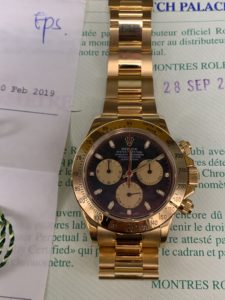
The 116528 here is a P series one from Year 2001 with skinny hands and old buckle. The old buckle is more elegant-looking than the new buckle while the new buckle is more practical to some. The watch here comes with guarantee paper, tags and service paper.

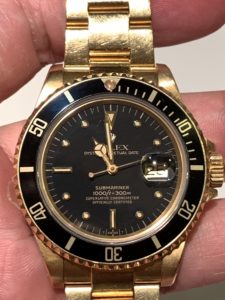
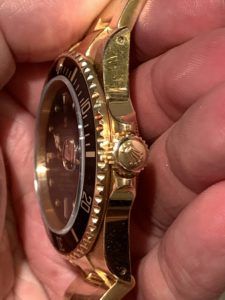
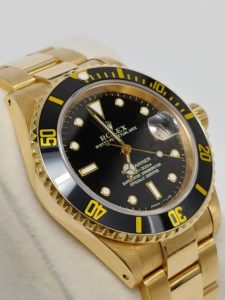
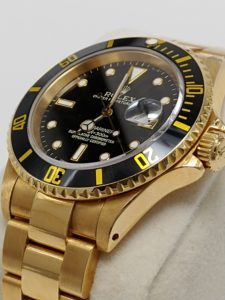
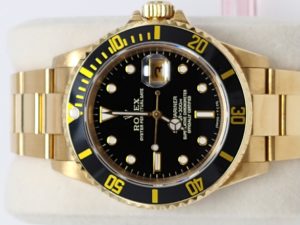
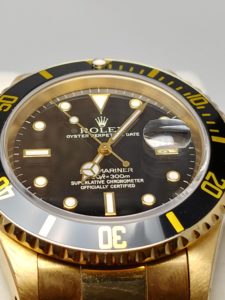
The Rolex 16808 18k gold Submariner

The Rolex 16808 is the 18k gold version of the 16800, which was the transitional Submariner that was produced between around 1977-1985. It replaced the ref 1680 and the 16808 replaced the 18k gold 1680/8.

The most obvious difference between a 1680/8 and a 16808 was the use of sapphire crystals on 16808 instead of plexi crystals on 1680/8. The movement was also upgraded to 3035 with the quick set feature that allows you to set the date quickly. The depth rating also improved to 1000 ft/ 300 M instead of 200m. These features make the 16808 a more usable daily watch.

Through the production of the 16808, it featured both the nipple matte dial and the glossy lacquer dial with markers with white gold surroundings. On its predecessor the 1680/8, one of  the biggest features is its nipple dial. Therefore, as the last generation of Submariner that featured the nipple dial, the nipple dial version of the 16808 is more expensive than the lacquer dial with markers with white gold surrounding, which can still be found on 16808’s successor, the 16618.

The correct bracelet for a 16808 should be a 92908 bracelet with 46 end link. The number 46 is engraved on the inner part of the end link which is only visible when it is taken off from the case. The insert of the 16808 is the typical 80s Submariner insert which no longer features fat fonts as those on 1680/8.

The 16808 with a nipple matte dial is a cool watch itself as it has the best of two different generations of Submariner. While you can find vintage cues from the nipple matte dial, a modern touch, which is the sapphire crystal, blends the two generations together perfectly in one watch. The movement is also way more convenient and reliable while the bracelet is also much tougher.

The investment value of a 16808 is high while it is not as hard to be found as the 1680/8. As it was a watch produced in the 1980s, it is easier to find examples in good condition. Also, the threshold of collecting it is not as high as 1680/8. A 16808 without papers and box is usually around 220,000hkd to 230,000hkd while a 1680/8 in good condition could cost you north of 300,000hkd. The 16808 with nipple dial is a collectible piece that gives you the looks of a 1680/8 while paying way less.
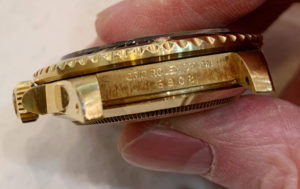
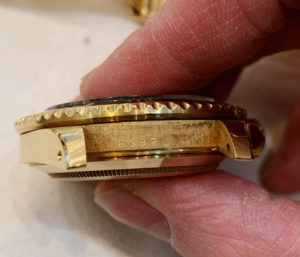
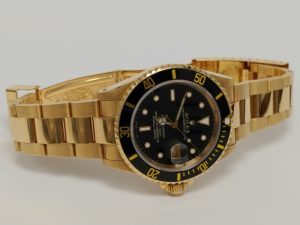
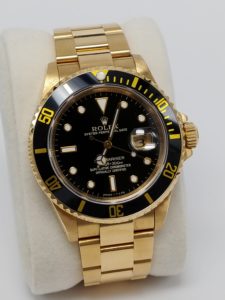
The photos here are from my 8.5mil 16808 unpolished. It does not come with any paper and it is for sale at 216,000hkd.
Jaeger-Lecoultre Grand Reverso Ultra Thin Tribute to 1931


The Legendary Reverso

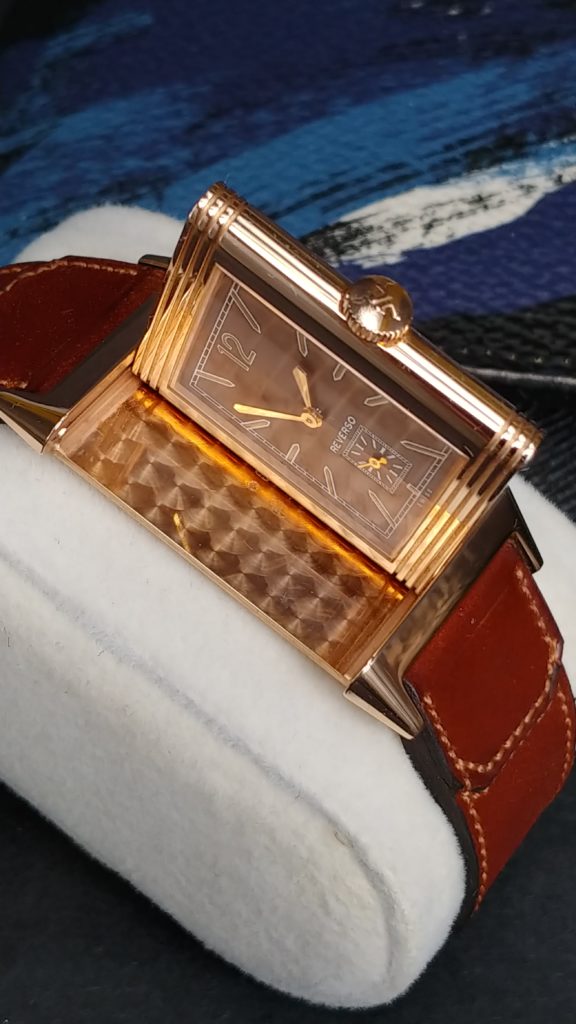
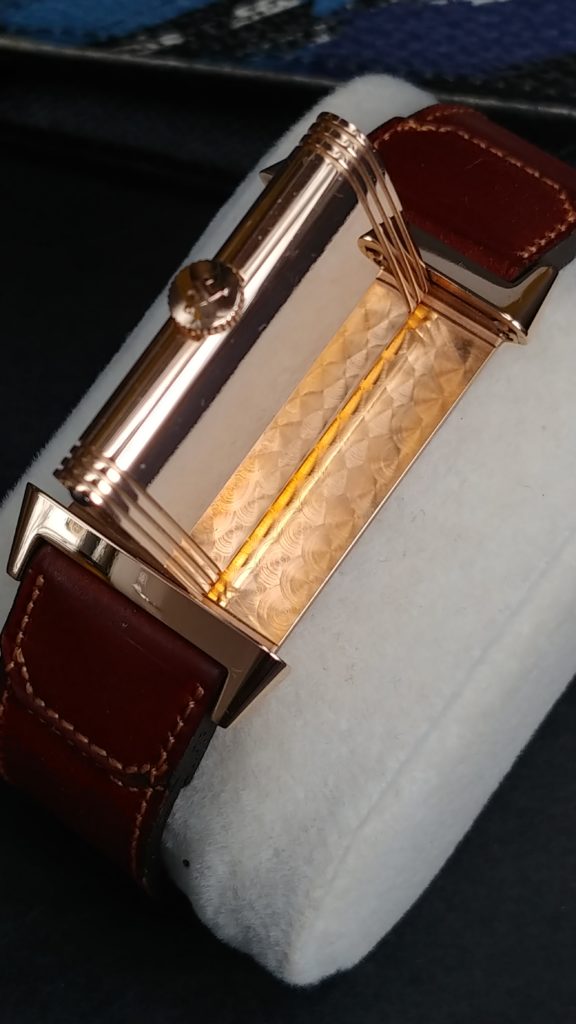
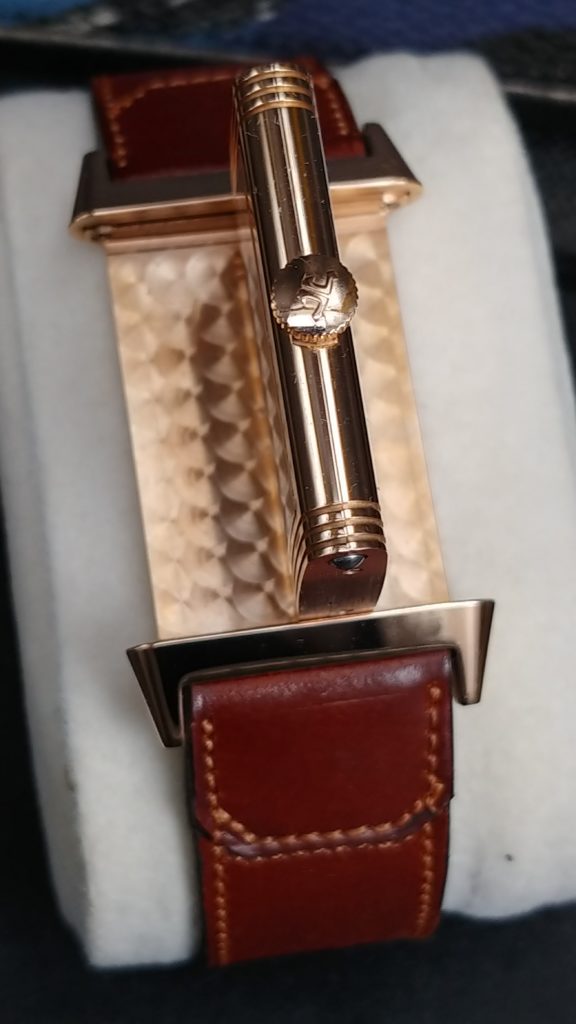
A Reverso has two sides, hence its name. The dial on a Reverso is much like a painting because of its rectangular shape. A Reverso is somehow like a book as well, especially when you turn it to see the other side of the watch. It is much like flipping a book’s pages.

The Reverso “Chocolate”

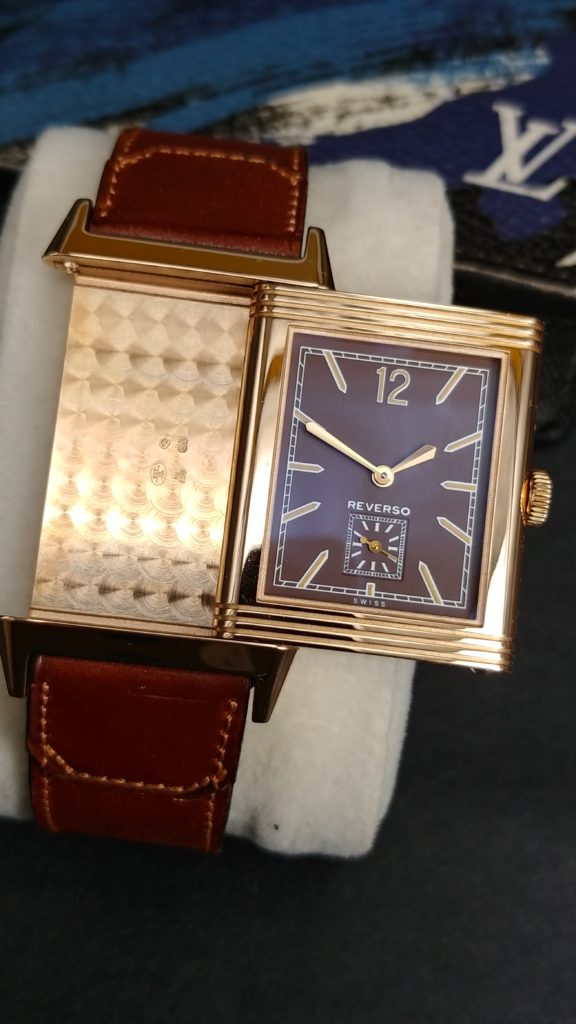
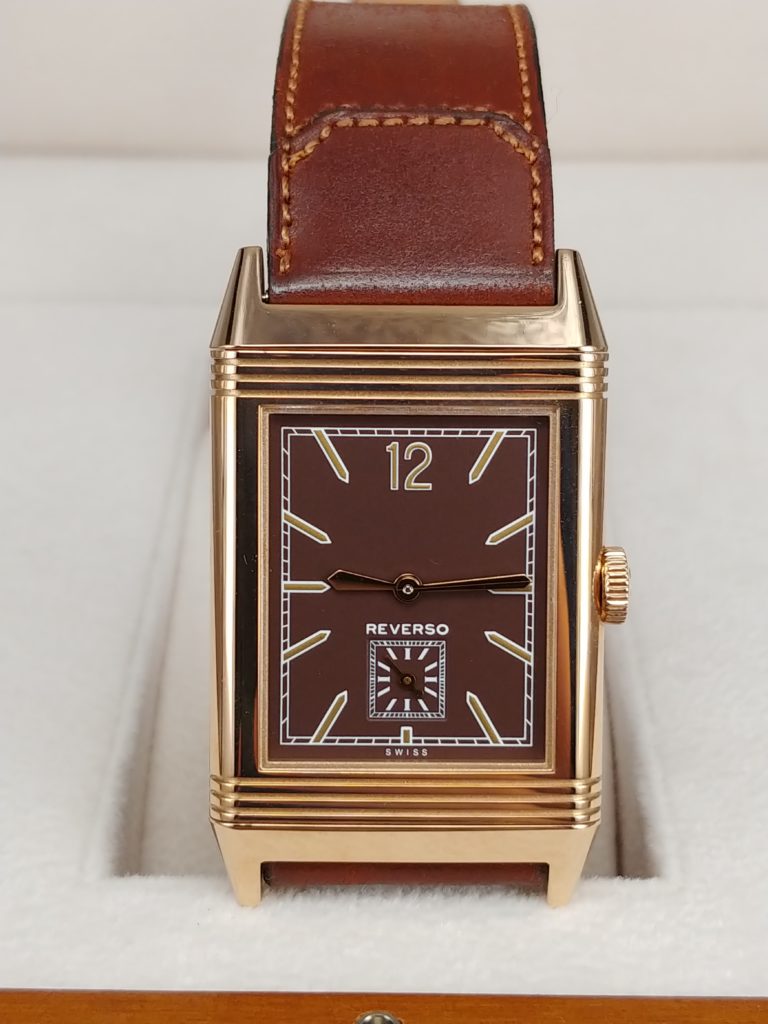
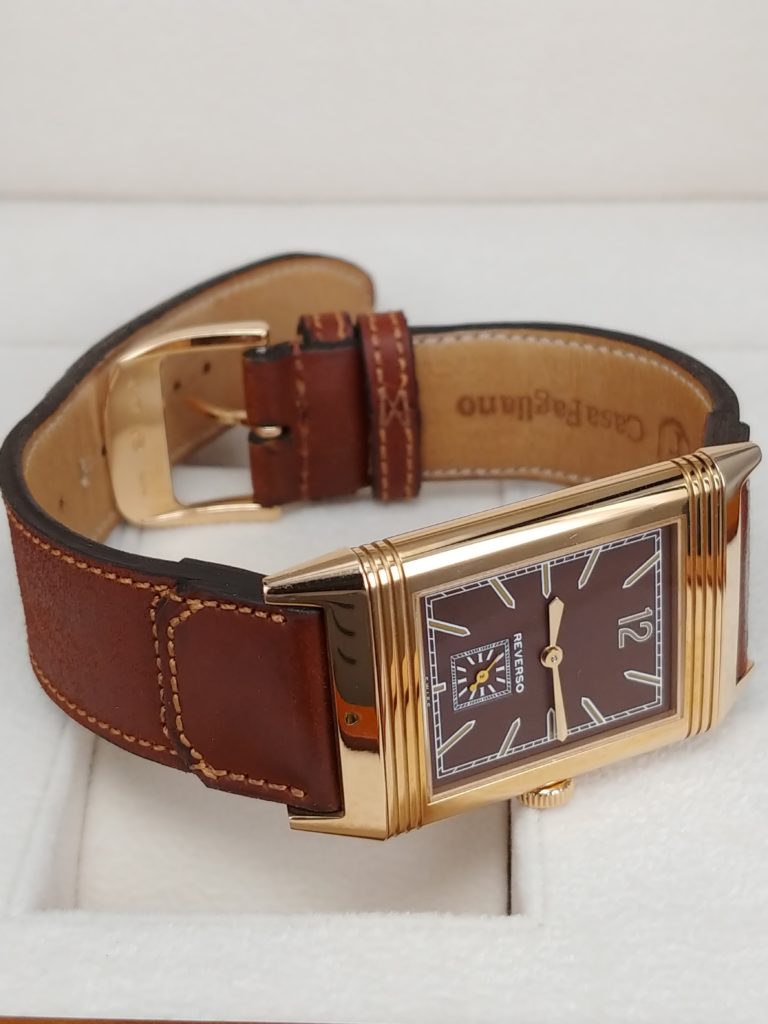
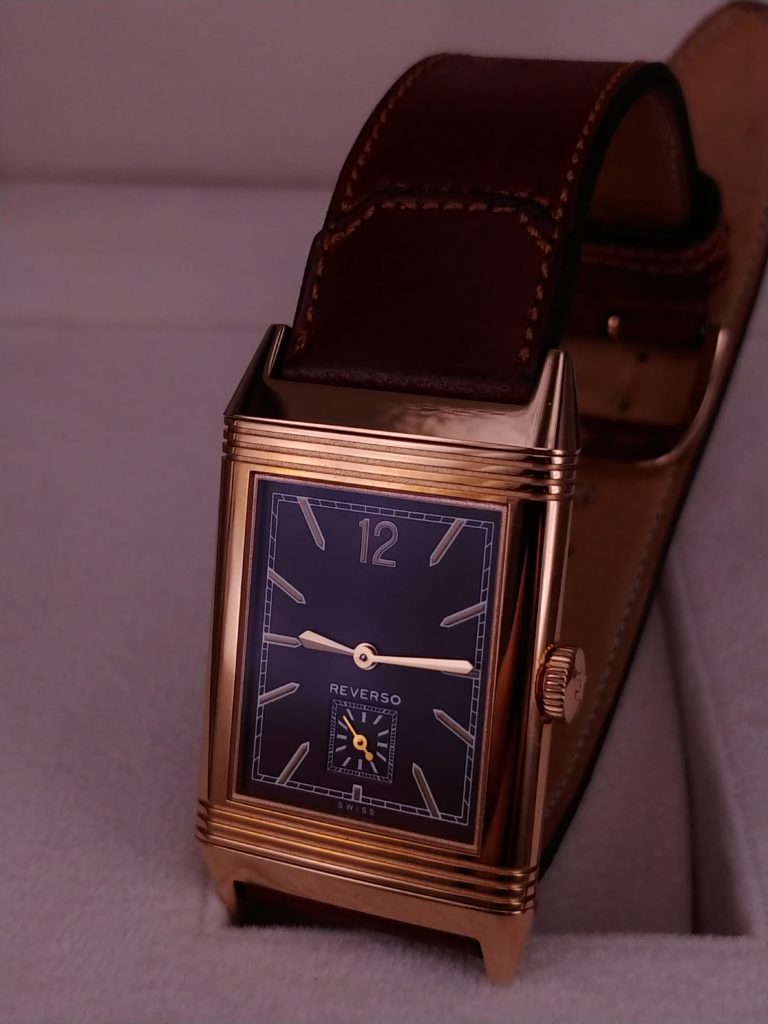
In rose gold, this watch has a grand size of 46.8 x 27.4mm. Thanks to its size, it does not look too small on bigger wrists. The dial has a very strong vintage feeling with its chocolate brown color, arrow-shaped hour markers with aged lume, railway track minute markers and a sub-dial for seconds display. The sword hands are plated with rose gold. Together we see a design which sticks to its ancestors’ in the 1930s. The other side of the case is blank, leaving you space for any engraving.
The Casa Fagliano strap

What is better is that the watch comes with a shell cordovan strap by Casa Fagliano, an Argentinian polo boots maker. The brown shell cordovan strap has special stitching style that complements very well with the striped case.

The movement

Inside this watch is the JLC movement 822/2 which has 45 hours of power reserve. It is manually wound and the winding is very smooth.

On the wrist

On the wrist, this watch is perfect for occasions like formal dinners and business meetings. Because of its size, it is also a good piece to wear when you want something understated yet charming to decorate your wrist on a casual day.

Conclusion

All in all, this watch is a truly amazing piece. It has all the vintage elements a watch lover would like to see. The brown dial is almost like a tropical dial but it is not. The strap is really cool and it completes the vintage puzzle for the watch , as this watch will certainly be downgraded by any other strap .

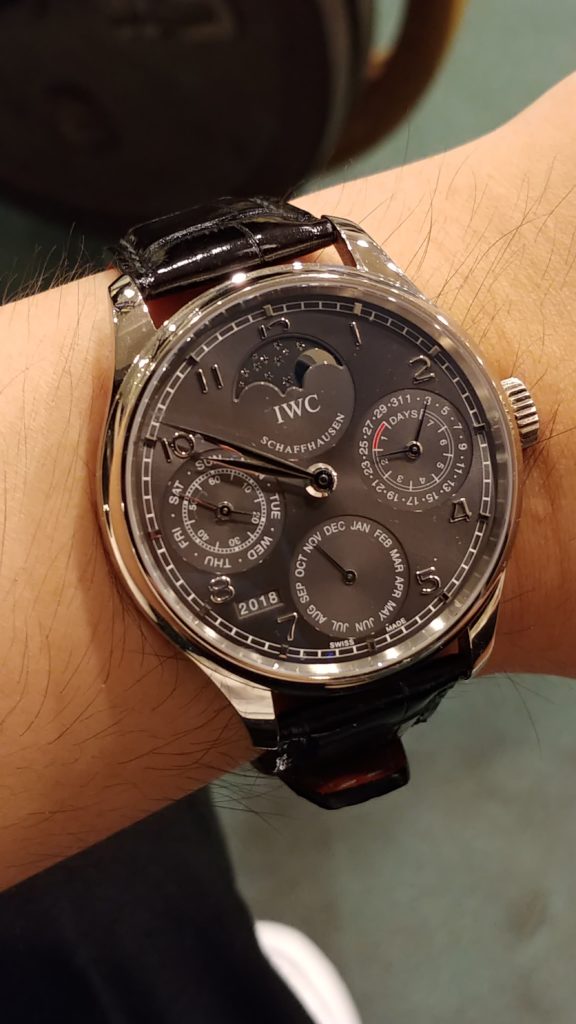
IWC 502307 Portuguese Perpetual Calendar


The Portuguese Collection

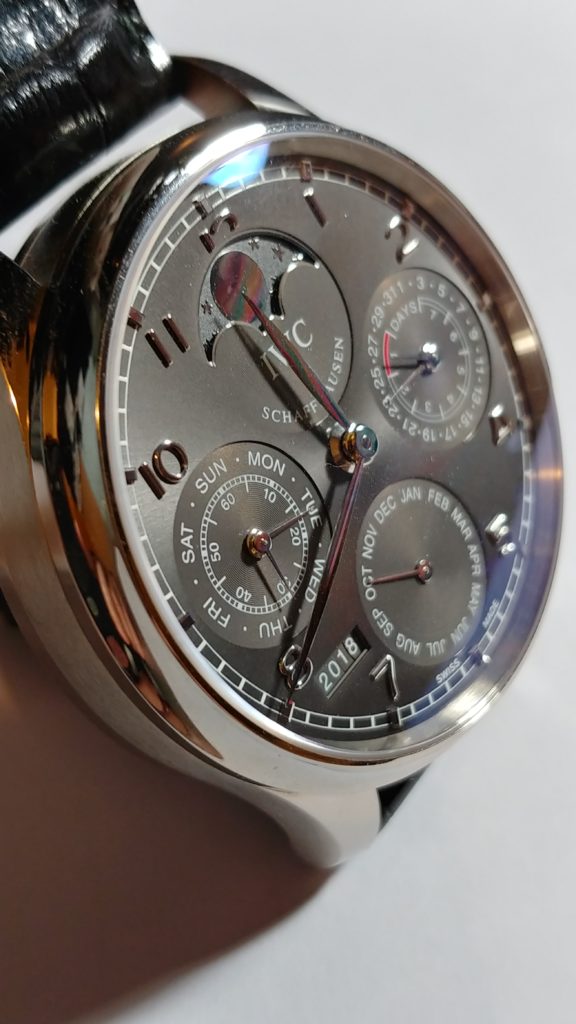
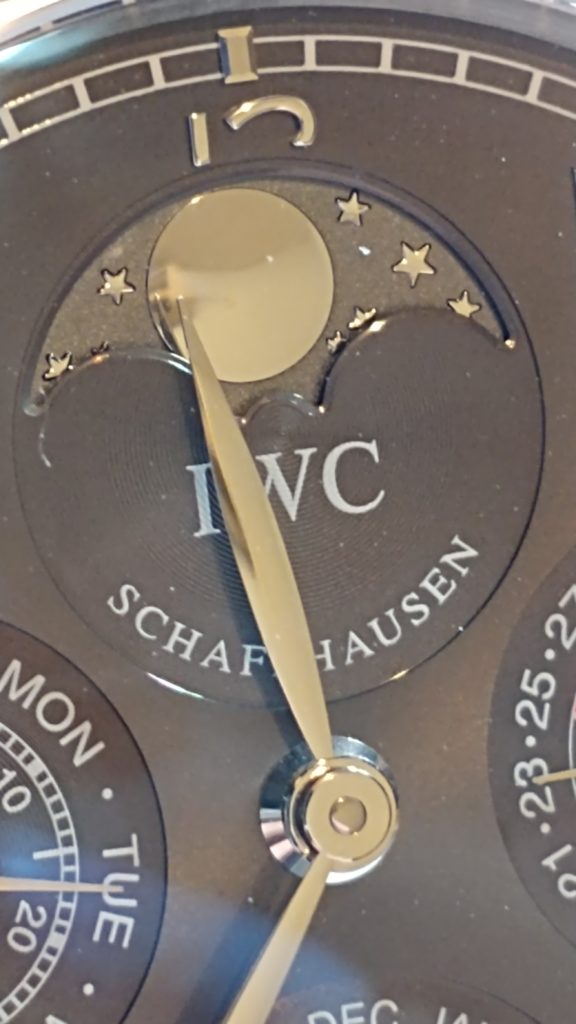
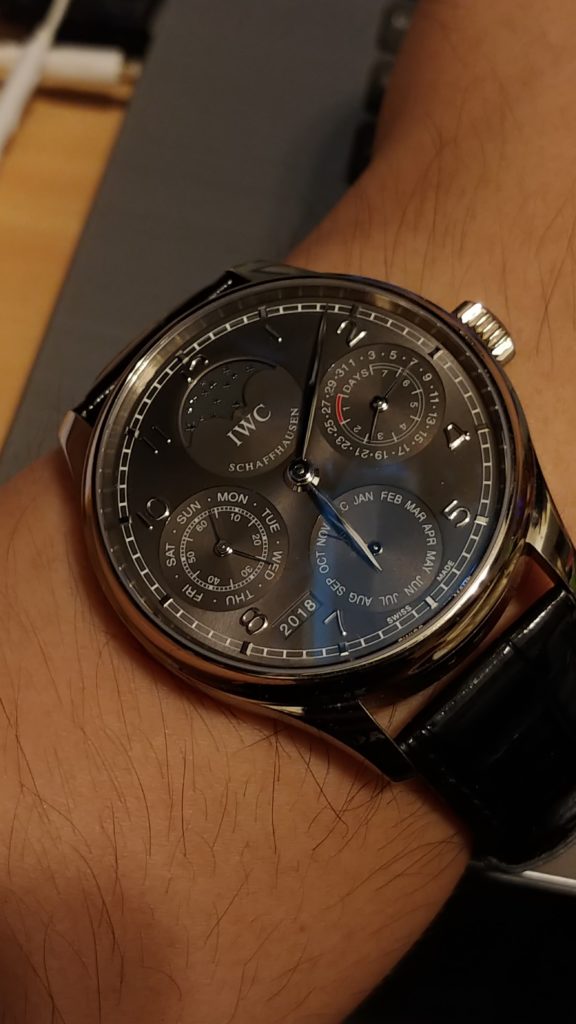
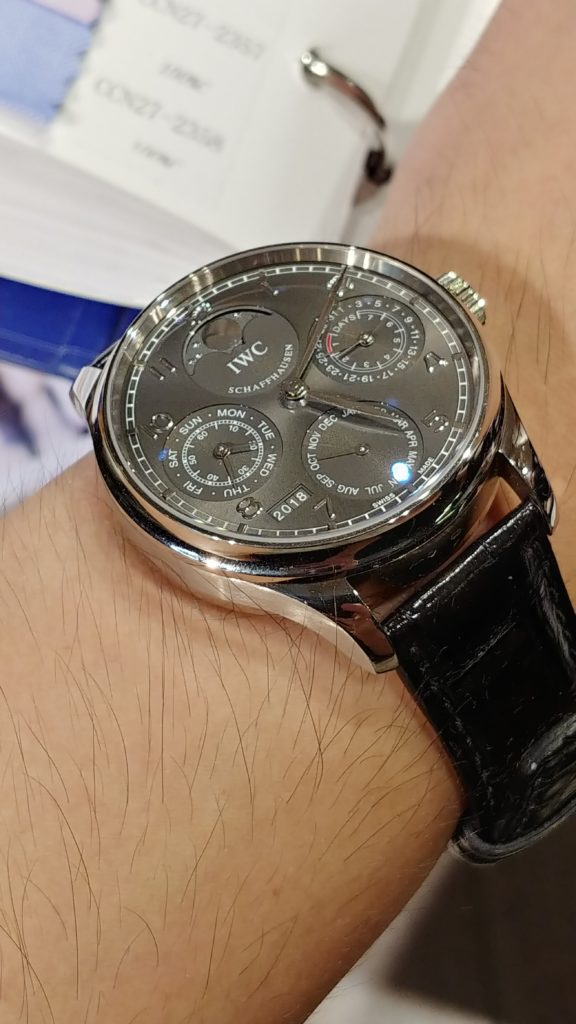
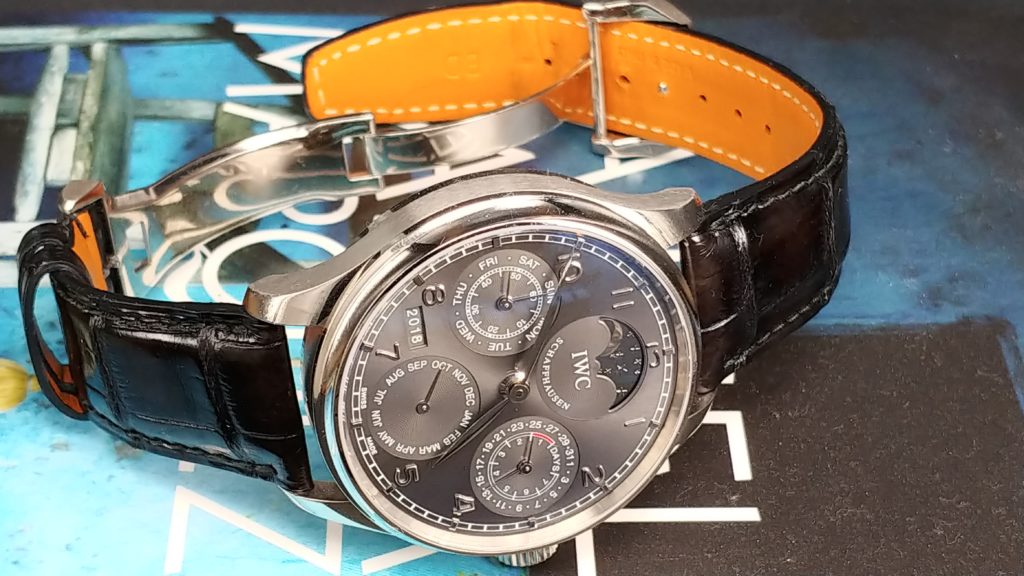
The Portuguese Collection has long been one of IWC’s most iconic collections. It features watches that look classic but retains bits of modern design. An IWC Portuguese is always easy to recognize. Design features, such as leaf-shaped hands, railway track chapter ring, Arabic numerals and classic case shape, make the Portuguese one of the most successful collections for IWC. The Portuguese 50237 Perpetual Calendar here is in white gold with an Ardoise dial.

Case

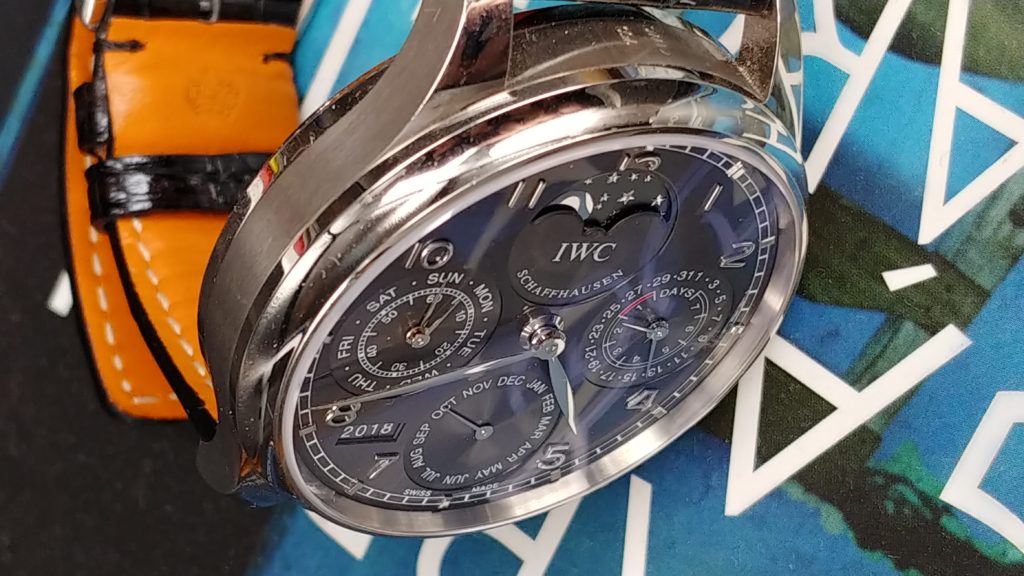
The case size of the watch is 44mm and it is 15.5mm thick. This imposing size has been the tradition of the Portuguese collection. The case has a polished concave bezel, a brushed middle case and a polished display case back. The bezel reflects light in an elegant way and its concave shape make it extraordinarily classy to look at and it perfectly complements the box-type crystal. The lugs are curved and polished on the surfaces while brushed on the sides.

Dial and hands

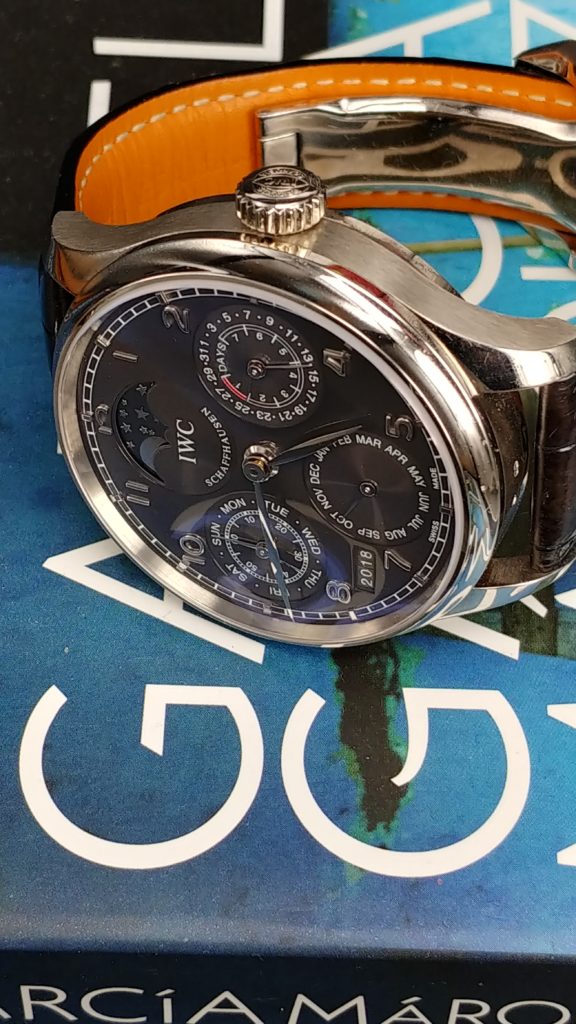
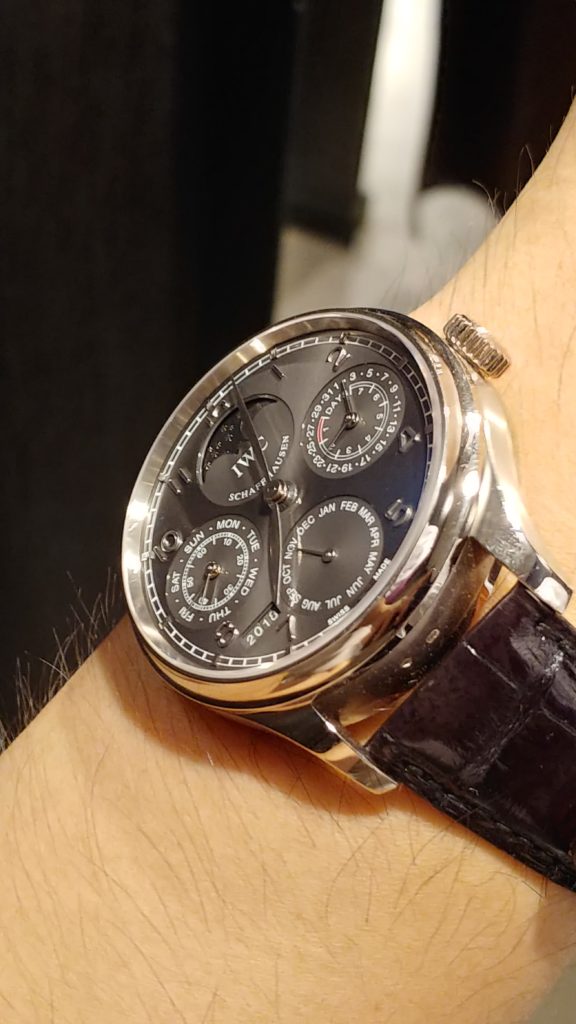
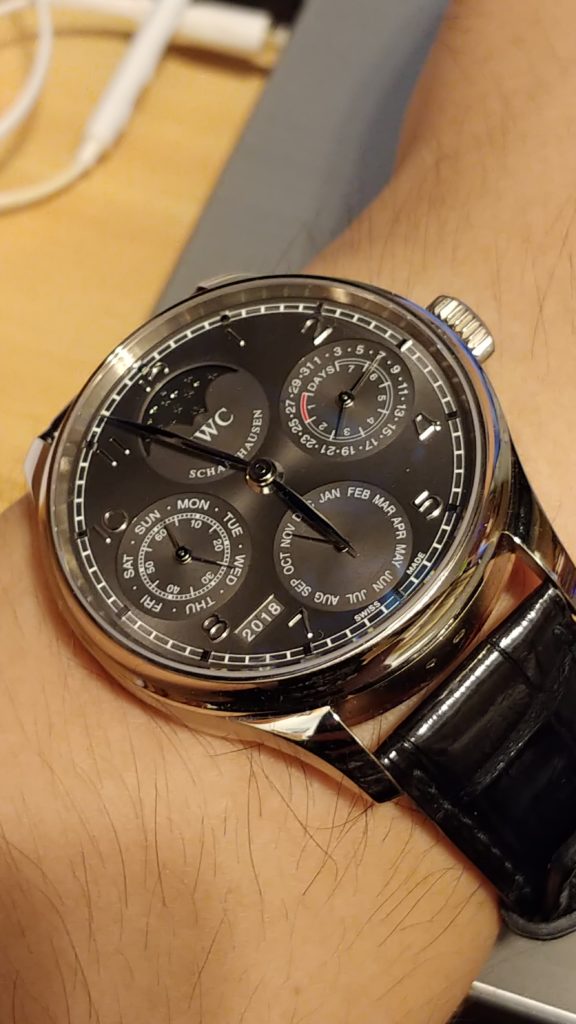
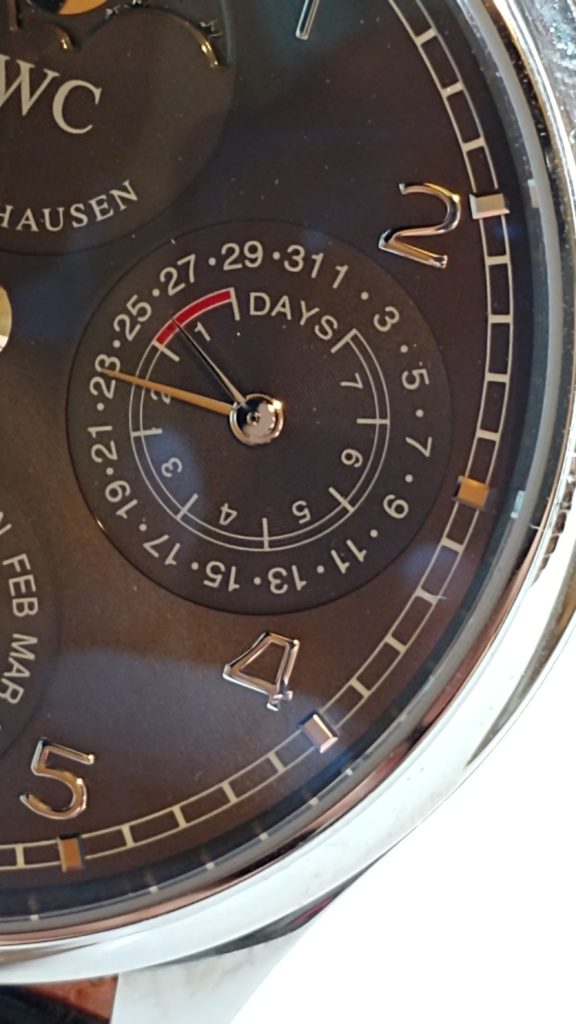
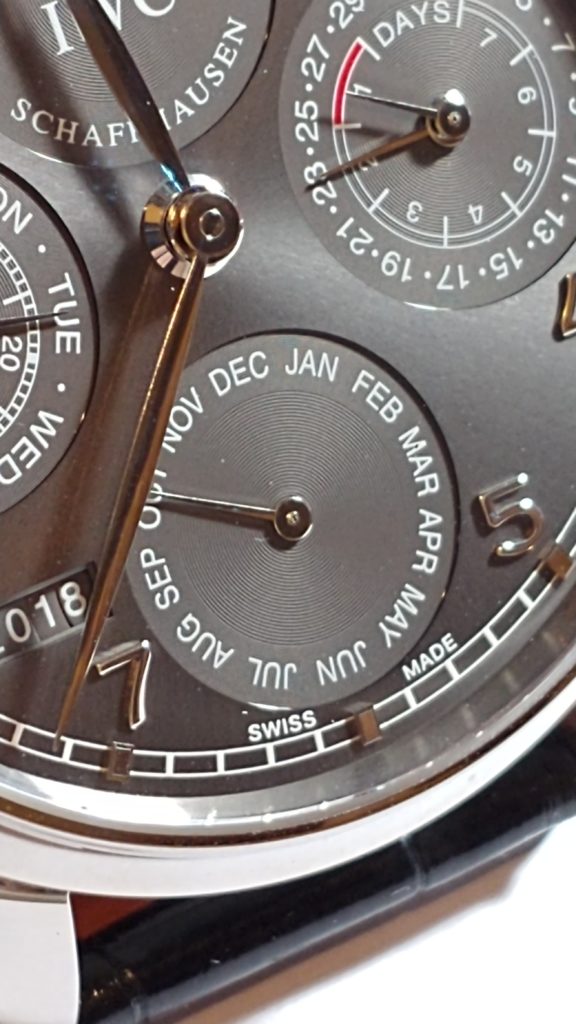
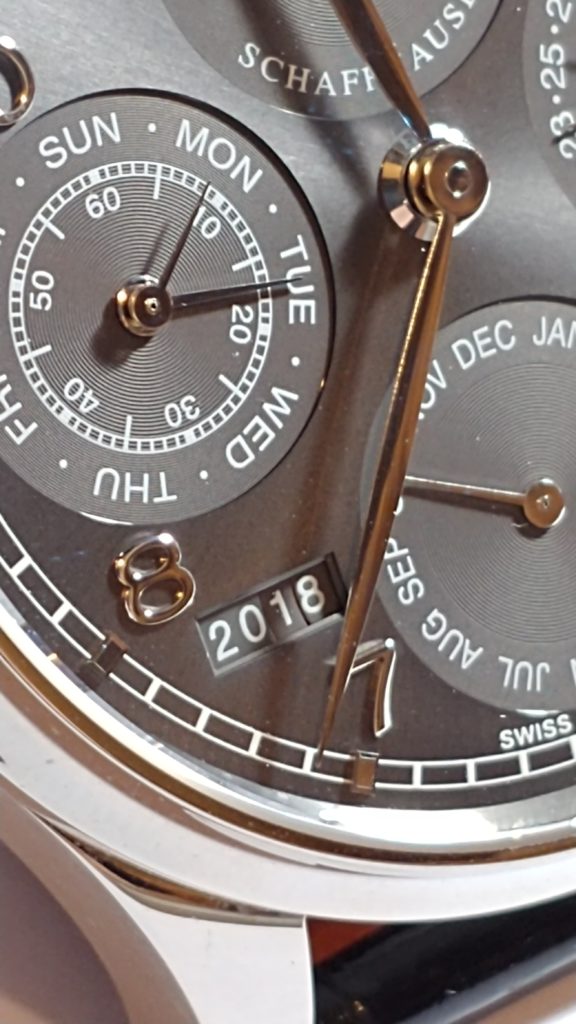
There are a lot to read on the dial. At 12 o’ clock, you have the moonphase display and the brand logo on it. The moon is polished and is silver in color while the sky and stars are grey and silver to match the dial color and the white gold case. At 9 o’ clock, there is the sub-dial for seconds and days. The display of months is at 6 o’ clock. The power reserve indicator and the display of dates are in the same sub-dial at 3 o’ clock. Also not to be missed is the display ofyears at 7 o’ clock.

As a perpetual calendar, this watch can adjust automatically during the end of each 31-day and 30-day month. It can also track leap years automatically. The watch needs no adjustment until the year 2499 and the moonphase display will be accurate for more than 500 years.

The dial layout is clear and easy to read as most texts are in a contrasting white color. The Arabic numbers and the railway track chapter ring are there to highlight its Portuguese bloodline. The grey sunburst, under different lighting, gives out different shades of grey.

The hands, long and leaf-shaped, sweep round the dial in a classy and clear fashion every time you adjust the time.

The movement

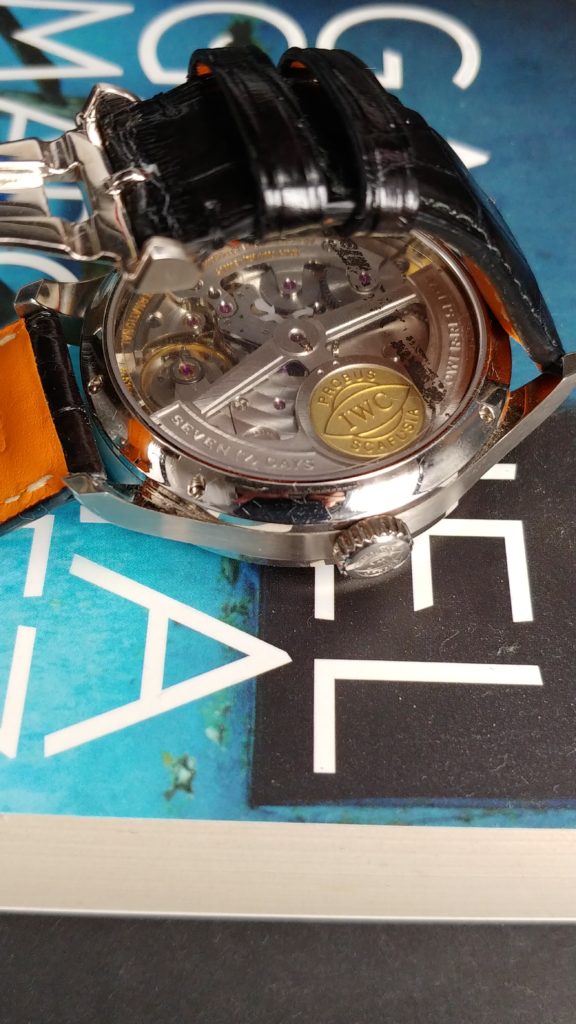
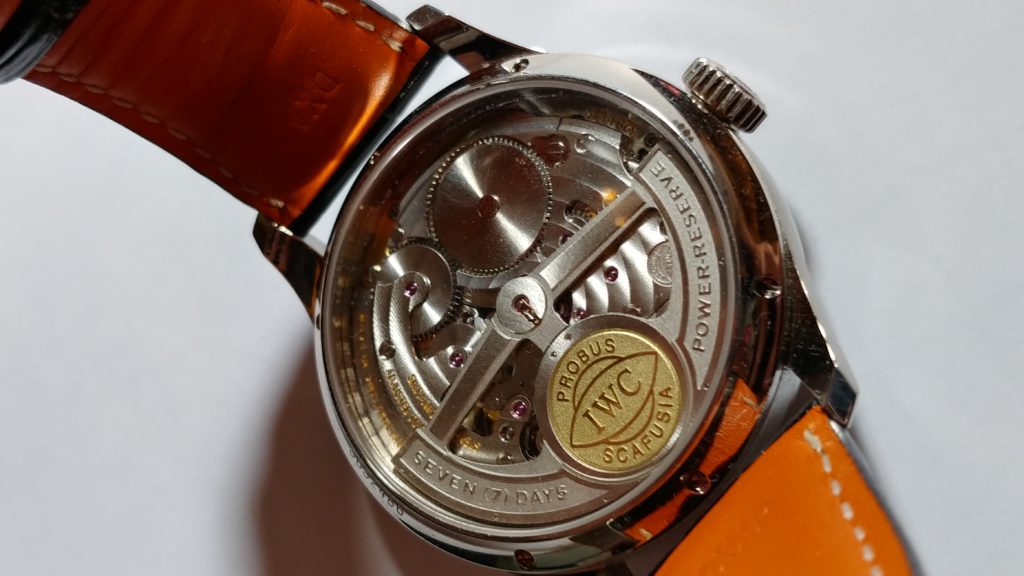
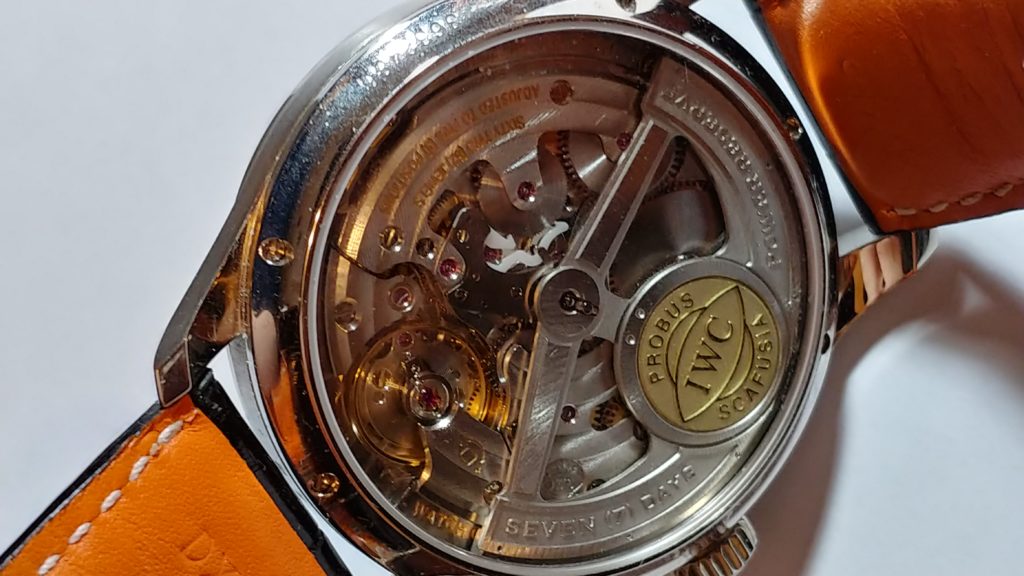
The watch is equipped with an IWC Caliber 51613, which is a rather big movement as it is about 38mm in diameter and it is quite big as the case itself is 44mm. It has a power reserve of 7 days, or 168 hours, ensured by a single barrel. It is a very substantial amount of power and a 7-day power reserve will spare you the trouble of winding the watch all the time. The movement has a rotor that has a solid gold IWC medallion and it uses the Pellaton winding system which uses pawls rather than direct gearing between the rotor and barrel. This helps isolate the gear train from shocks.

As mentioned before, the movement itself is quite big. When you look at the case back, you can have a feast. It is quite an imposing view when you compare its size to smaller movements on watches like an Royal Oak Offshore. The rotor, the plates and the wheels look way larger than other movements.

Strap and buckle

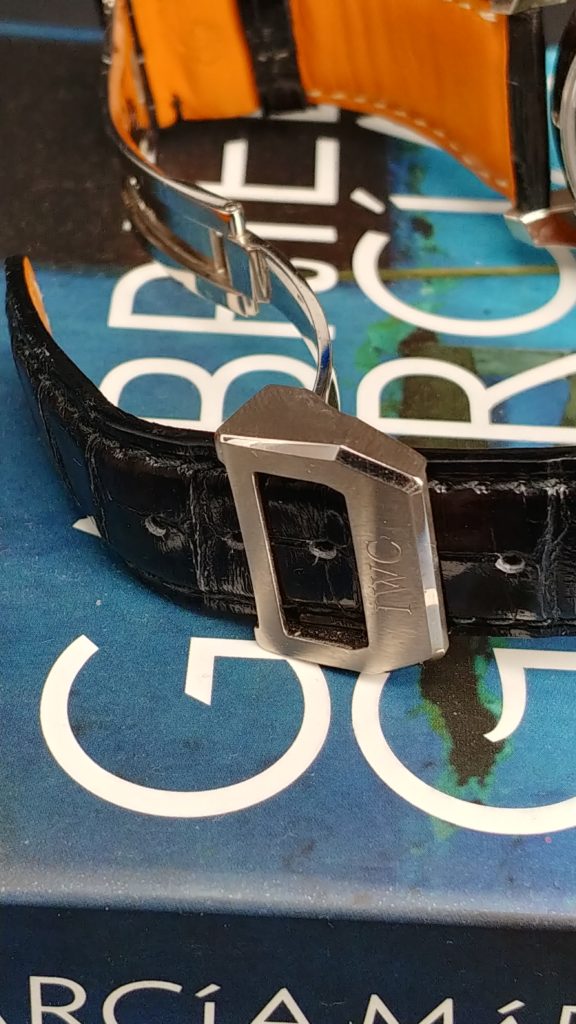
This watch comes with a finely finished glossy black alligator strap and a robust IWC deployant buckle. The strap is particularly nice as it has orange lining with white stitching while on the front it has black matching stitching.

Conclusion

As one of the most recognized watch in the world, a Portuguese is widely worn by businessmen and suit wearers. Surely, the big case size means that it can always go with any casual wear. On the wrist, it has a lot of wrist presence and its substantial weight  make it hard to be neglected. Even with a t-shirt and jeans, this IWC Portuguese Perpetual calendar will impress.

Also, this watch is quite affordable compared to other perpetual calendars produced by Patek Philippe, Vacheron Constantin, Audemars Piguet and the like. With a white gold case at 44mm and good functionality, this is a brilliant watch for anyone who looks for a perpetual calendar.

Breguet Tradition 7027 – A horological class

Ready for a horological lesson?

If a watch can teach you a lesson on horology, which watch will it be? The

Breguet 7027 may be the answer.

Where does this watch come from?

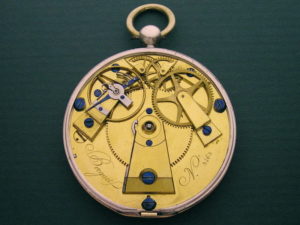
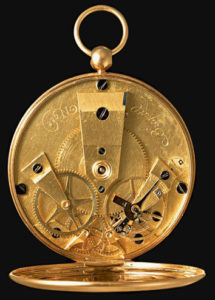
Named after its founder Abraham-Louis Breguet, Breguet is a brand that strives to preserve the essence of watchmaking left the giant. They came up with an idea of making a watch that could pay tribute to the Souscription watches made by A.L Breguet in the 1790s. Soon, the Tradition Collection was born and the 7027 came out.

Case and dial

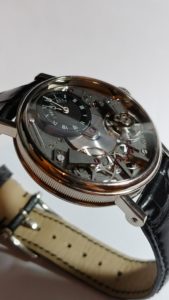
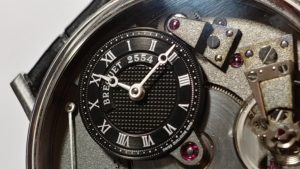
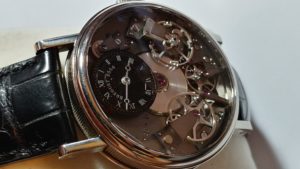
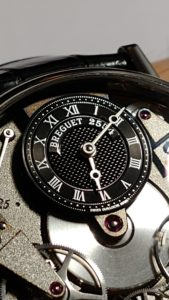
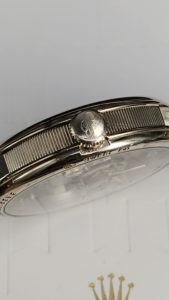
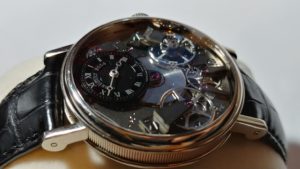
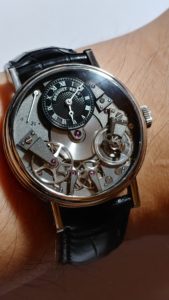
This 7027 here has a 37mm case in white gold. The middle of the case has the signature Breguet coin-edge pattern. The case is around 12mm thick and it has welded lugs. The black lacquered dial is made of a plate of solid gold. It features three different hand-applied patterns : the Clou de Paris in the center, circular graining around the hour ring and a grain d’orge (barley grain) pattern that separates the different zones of the dial. Not many manufatures use solid gold for their dials and Breguet is one of the manufature that craft their dials by hand with solid gold. The hands are very Breguet as well as they have the classic moon tips.

Movement

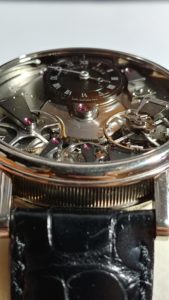
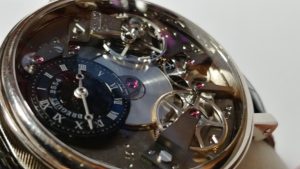
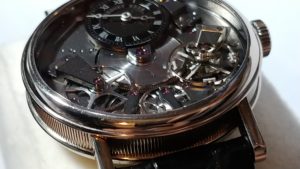
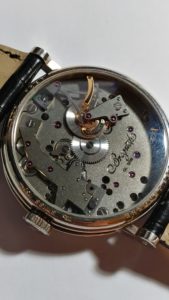
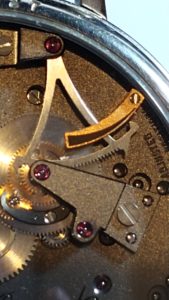
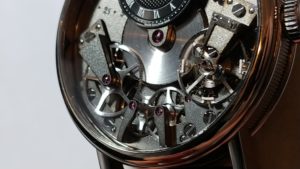
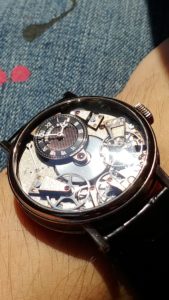
The movement is what really draws a person into this masterpiece. The hand-wound Cal507 by Breguet is shown on the front of the watch. You can see from the right the blance wheel, the pallet fork, the escape wheel, the fourth wheel, the third wheel and the center wheel on the left. At the center of the watch below the dial is the barrel where the power is stored. It is a vivid horological lesson.

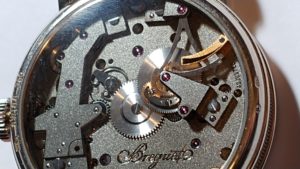
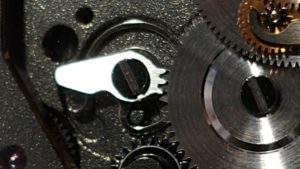
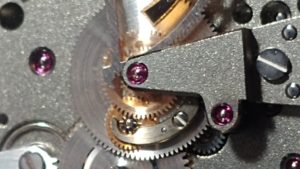
The plates and bridges all have a frosted anthracite finish which can only be done through complex manual processes. The movement also features polished bevelled angles, circular graining on the barrel and wheels, polished angles on the wheel spokes and black-polished screws. It is literally a work of art. The movement has 50 hours of power reserve and you can check the it from the power reserve indicator to the left of the dial. On the back of the watch, you can see another power reserve indicator which is in a vintage style and you can also see the ratchet wheels that turns when you wind the watch. The layout of the movement is well-balanced and it resembles the movement of vintage Souscription watches.


A piece of lesson on horology

When looking at this watch, you cannot help but wonder how a mechanical watch works. The finishes of the 7027 is absolutely top-notch and one of a kind. You see the whole movement exposed to you when wearing the watch. You can enjoy each move of the pallet fork or the balance wheel whenever you stare at it. It is a piece of horological essence that AL Breguet represents.

Style-wise, the watch has a classic size of 37mm and the skeleton dial (the movement) gives an impression that it is a watch with complications while it is just a simple watch. The welded lugs look vintage and the coin-edge case band reinforce that vintage element of the watch. If you ever want to own a watch that represents both modern and classic horology, this is the watch to have.

Size of watches

Watches are getting bigger and bigger nowadays. You can easily see a lady wearing a 44mm Deepsea or Panerai. So, is it the bigger the watch, the better?

Look at Patek Phillipe. They seldom make watches that are larger than 40mm. Most are in 38-39mm. It is about proportion.

Look at A Lange. Similarly, most of their watches do not exceed the size of 40mm. The Datograph was in 39mm although it is now in 41mm. The 1815 chronograph is in 39.5mm.

Smaller watches are not only harder to make. they are also more sophisticated. They carry a lot more discretion than those flamboyant 44mm or 47mm pieces of boast that are meant to be worn to show off one’s wealth.

But some watches, such as Panerai, and some pilot watches are meant to be big because of their military origins.

So, whether or not to wear a big watch (a clock!?) is totally a personal choice. It sometimes depends on whether you have a big wrist or not. It is however essential to bear in mind that a big watch is not always a good watch.

Photo courtesy of the owners (including myself) of the photos

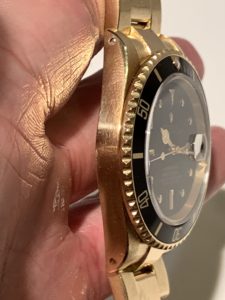
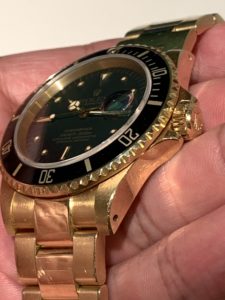
Rolex 16618 Onyx dial

The rare Onyx Submariner

Rolex produced some very special 16618 yellow gold Submariner in the late 1980s and early 1990s, probably only in E, X and N serials. These ultra rare Submariners come with either a Lapis lazuli dial or an Onyx dial. A Lapis Submariner 16618 was auctioned not long ago and it fetched a whopping price of HKD570,000. A Submariner 16618 with an Onyx or a Lapis dial is considered to be one of the rarest Submariner. Why is that?

First of all, Rolex put most of their precious stone dials on Datejusts or Daydates, which are both dress watches. Seldom do we see precious dials used on sport models such as the Submariner. The Daytona, however, has several versions with which Rolex produce with exotic stone dials. These stones include Sodalite, Mother of Pearl, Turquoise, etc. But on a Submariner? Never. Therefore, a Submariner with a precious stone dial is very collectible.

Efforts required to craft an Onyx dial

Other than that, an Onyx dial requires a lot of craftsmanship. As an Onyx dial is very fragile, it is complicated to produce with machines. As a result, an Onyx dial could only be produced by hand. Due to the complicated processes involved and its fragility, only 2 out of 10 dials could be used. It took long hours of polishing and precise cutting (including the cutting of the date window) to produce on flawless Onyx dial. It is the craftsmanship that counts when it comes to producing an Onyx dial, and that is also what makes each 16618 with an Onyx dial so precious and unique.

Why is an Onyx dial special and how to tell?

Rolex only produced very few 16618 with Onyx dials because people could hardly tell the differences between an Onyx dial and an ordinary black lacquer dial. The long hours of work was therefore not worthy. However, when you examine the dial closely with a loupe , especially under good lighting, you can see that the dial surface is very smooth and it reflects light in a way that is completely different from how a lacquer dial reflects light. An Onyx dial is much more like a calm lake without any ripples. It is like a black mirror while a lacquer black dial is much more like a painting in black. The dial has a shine that , when combined with a yellow gold case, is impeccable while still understated. It is simply mesmerizing.

Another way to tell that it is an Onyx dial is through the golden frame on the date window. Rolex puts a golden frame on every precious stone dial. The Onyx dial itself also has a gentle slope around the rim of it. You can see a bit of glue around the rim where the dial touches the case. The bezel is also different from any ordinary 16618. The numbers on the bezel is yellower than those on the bezel of a 16618 with a lacquer black dial.

A rarity that is powerful

The 16618 Submariner with an Onyx dial is a watch that is very powerful though understated as most will misunderstand it as a ordinary black 18k gold Submariner. How and why this watch is important can only be known when one examines it closely. Only a true watch aficionado can appreciate this beauty. With it on your wrist, you have every secret of this watch kept to your very own self. A 16618 with an Onyx dial in good condition is around HKD400,000 – HKD500,000.

Baselworld 2018 – The Rolex 126710 GMT Master II Pepsi

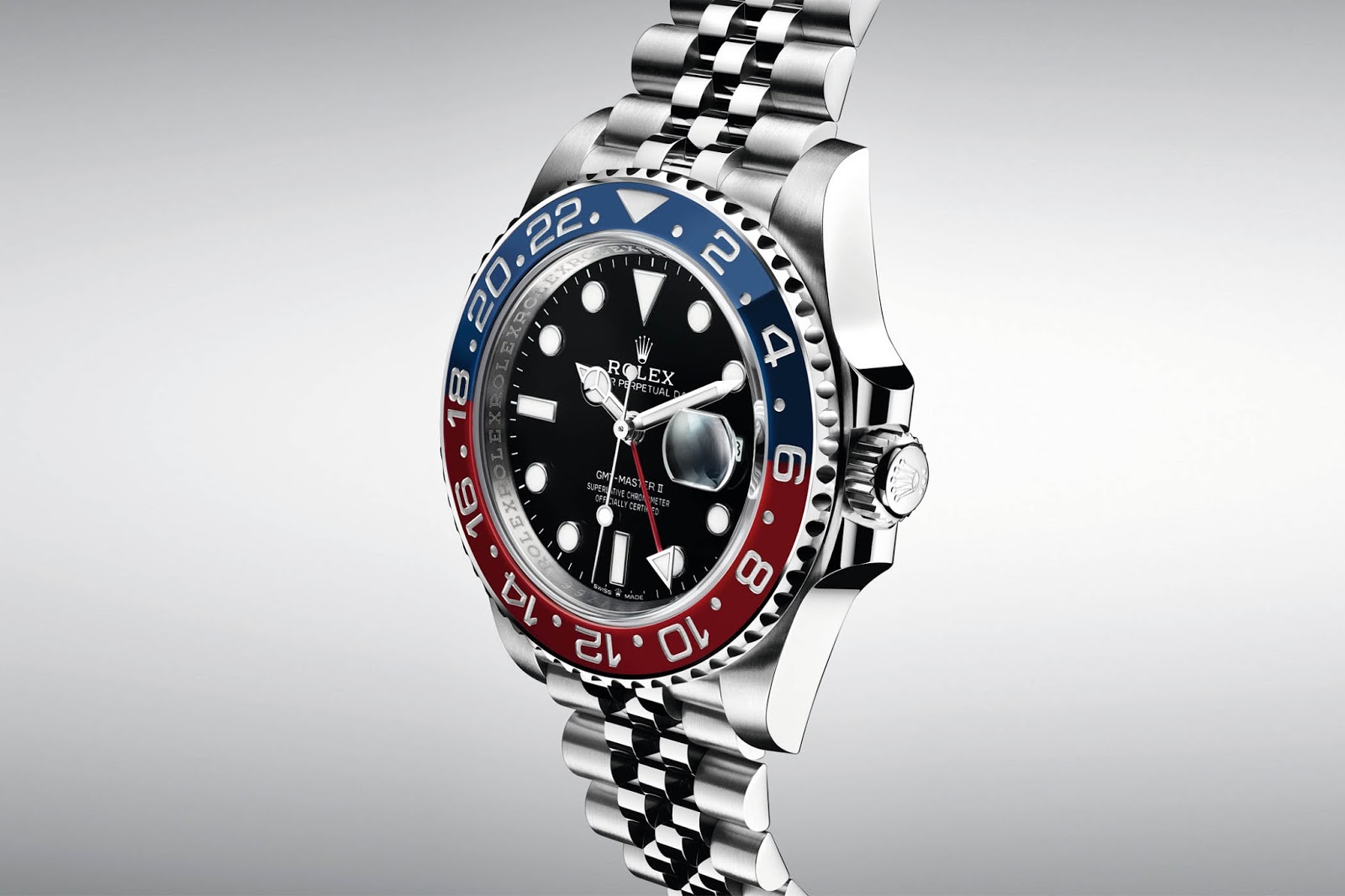
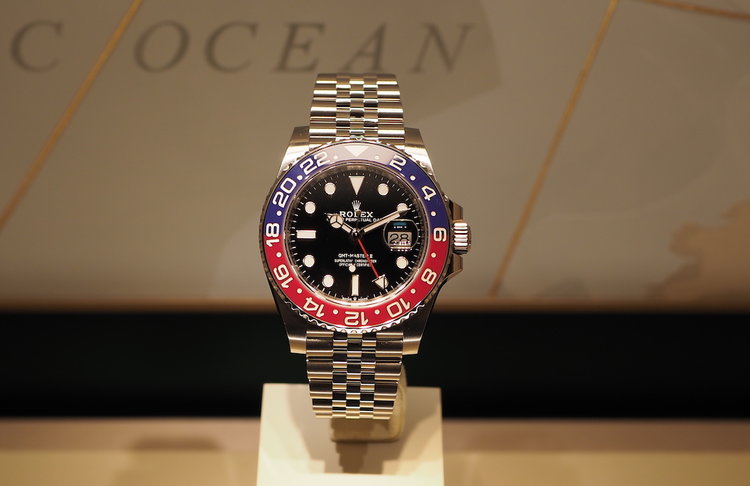
At this year’s Baselworld, Rolex released a heavyweight new GMT Master II Pepsi in steel with a Jubilee bracelet. The watch is equipped with the newest 3285 movement which guarantees +2/-2 accuracy a day. It has a bi-directional bi-colour ceramic bezel and hence the nickname “Pepsi”.

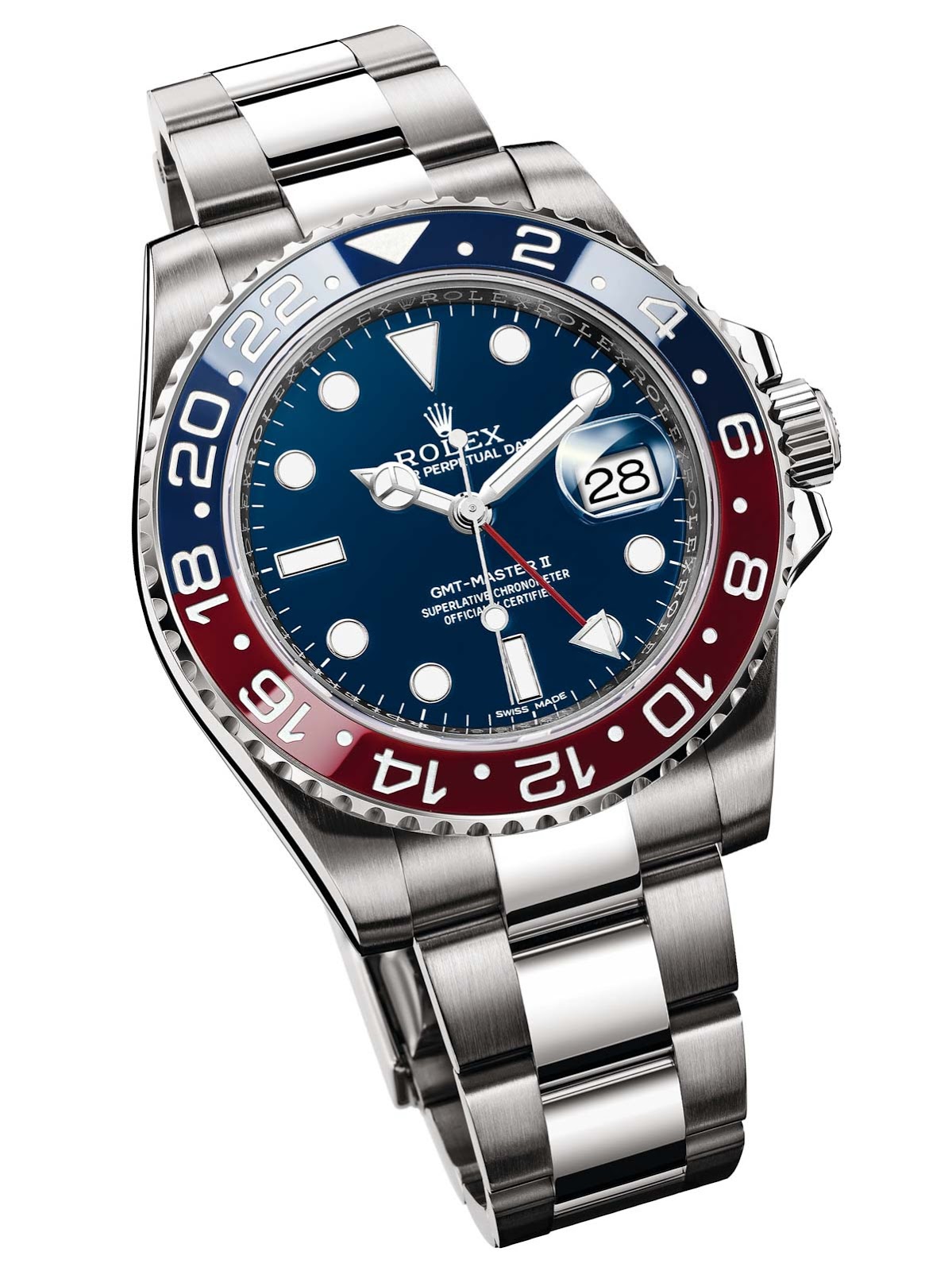
This watch is going to impose some impact on the price of the white gold GMT Master II Pepsi. The white gold Pepsi has basically the same looks as this steel Pepsi except that it has the Oyster bracelet. Rolex also updated the white gold Pepsi with a blue dial.

In fact, the Jubilee bracelet was always an option on the GMT Master II before the 116710 generation. The prices of vintage GMT Master with jubilee bracelet especially the 1675 will rise in the near future with this new release coming.

How has the Rolex Daytona evolved?

The evolution of the Rolex Daytona

Many of us are more than ready to get the new Rolex Daytona 116500ln. The Daytona is an interesting watch that has been Rolex’s ace for years. It is almost a cult success. So, how has the Daytona reached its current status?

In 1963 Rolex debuted the first Cosmograph model ref 6239. The features of it includeda tachometer scale engraved on the metal bezel and the dials were either in black with silver counters or in silver with black counters.

The name “Daytona” did not appear on the dial until 1965. A new dial version called “exotic” was introduced in 1965. It featured an outer track which matches the sub-dials running around the edge of the dial.The seconds sub-dial is at 9 o’clock and it is marked at 15, 30, 45 and 60.

The ref 6240, which was produced till 1969 only, introduced screw-down push pieces and it became the first ref of the Dayton which was fully waterproof. Interestingly, the word “Daytona” is not always printed on the dial of the 6240. I do think that the “exotic” dial looks way better than usual dials for the 6240.


References 6262 and 6264 were produced between 1970 and 1972.
These references adopted push-down buttons with metal bezel or black plastic bezel.. Dials were either white with black sub-dials or vice versa.
From 1971 to 1987, Rolex produced the Daytona 6263 and 6265. These references adopted black plastic bezels and metal bezels and they were waterproof to 100 meters.

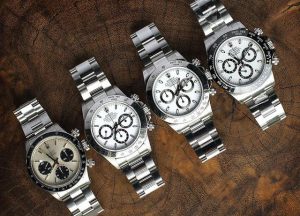
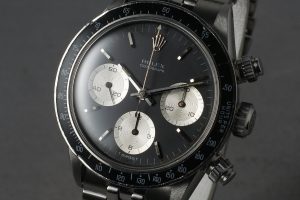
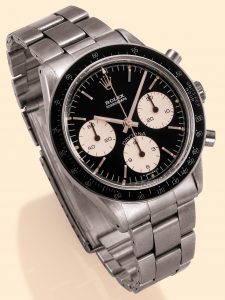
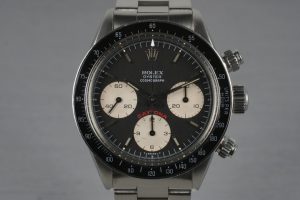
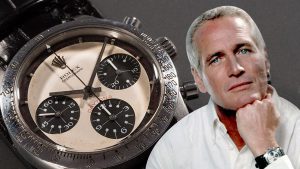
The Daytona 6263 is also now known as the “Paul Newman” Daytona because movie star Paul Newman wore the ref 6263 and a ref 6241 on a bund strap. Any Rolex Daytona with exotic dial is known as “The Paul Newman Daytona”. Particularly, a Paul Newman dial must be in ref 6239, 6241, 6262, 6263, 6264 or 6265.

The most sought-after models of the Daytona today include these “Paul Newman”Daytonas. These watches are often seen fetching very high prices during auctions.

Rolex started in 1988 manufacturing the 16520 Daytona. The watch had a 40mm case instead of a 37mm one and it had sapphire crystals instead of Plexiglas. Before the 16520, the Daytona had always featured a manual-wound movement. The breakthrough came when Rolex adopted a new automatic movement based on the Zenith El Primero 400. The heavily modified movement was then the Calibre 4030. Because of limited supply and super strong demand, the 16520 was a great success.

Some notable models included 16520 with porcelain finish dials and 10-watch-only 16528 blue dial for Rolex directors.


In 2000, the Rolex Daytona 116520 was out. It featured a totally in-house caliber 4130 and the black dial version had been a very sought-after model from 2000-2015.

So, what has made the Daytona such a success? Maybe it is because of the limited supply. Maybe it is because of the design of the watch. Or, maybe because it is a Rolex chronograph, which has always represented precision from the day it was born. In today’s world in which big watches are in vogue, the Rolex Daytona retains its classic shape in 40mm. The dial style of the new 116500ln white resembles the “panda” style of the “Paul Newman” Daytona, which is one of the most important legacy of the Daytona. Its bezel is now ceramic and it does not attract scratches anymore. These small improvements and dedication to the original details are what it takes for a watch to become legendary.

Photo courtesy of the original owners

Cart
Enquiry Cart ×
Loading....